

The Big Shift: Why Down Payments Are Shrinking (And How You Can Cash In)
Saving for a down payment has always felt like the ultimate hurdle in homeownership. With recent affordability squeezes, it’s completely normal to look at the housing market and wonder, “How is anyone actually doing this right now?”
But there is some surprisingly good news shifting under the radar.
Buyers are getting creative, and the upfront cash needed to secure a home is finally dropping. According to data from Realtor.com, the typical buyer put down about $23,400 in early 2026—a staggering 19% drop (about $5,000 less) compared to the year before. In fact, down payments haven't been this low since 2021.
So, what’s driving this trend, and how can you take advantage of it? Here is a breakdown of what's happening and how to get your foot in the door with less cash.
3 Reasons Down Payments Are Shrinking
If you thought you needed a massive 20% down payment to buy a home today, market dynamics are proving otherwise. Three major factors are driving down payment sizes down:
Cooler Competition: The frantic bidding wars of a few years ago have quieted down. With a more balanced market, buyers no longer feel intense pressure to flash massive down payments just to get a seller's attention.
Moderating Home Prices: Because your down payment is tied directly to the purchase price of the home, leveling home prices (and slight dips in certain markets) naturally translate into smaller down payment requirements.
The Rise of Low-Down-Payment Loans: Buyers are increasingly leaning into government-backed loan options. FHA loans (which require as little as 3.5% down) have comprised over 24% of purchase mortgages for five straight quarters. Meanwhile, VA loans (which often require 0% down for eligible veterans and service members) recently hit their highest market share in over a decade.
The Secret Weapon: Down Payment Assistance
Even a smaller down payment represents a significant chunk of change. If you're struggling to save up, you might be leaving free money on the table.
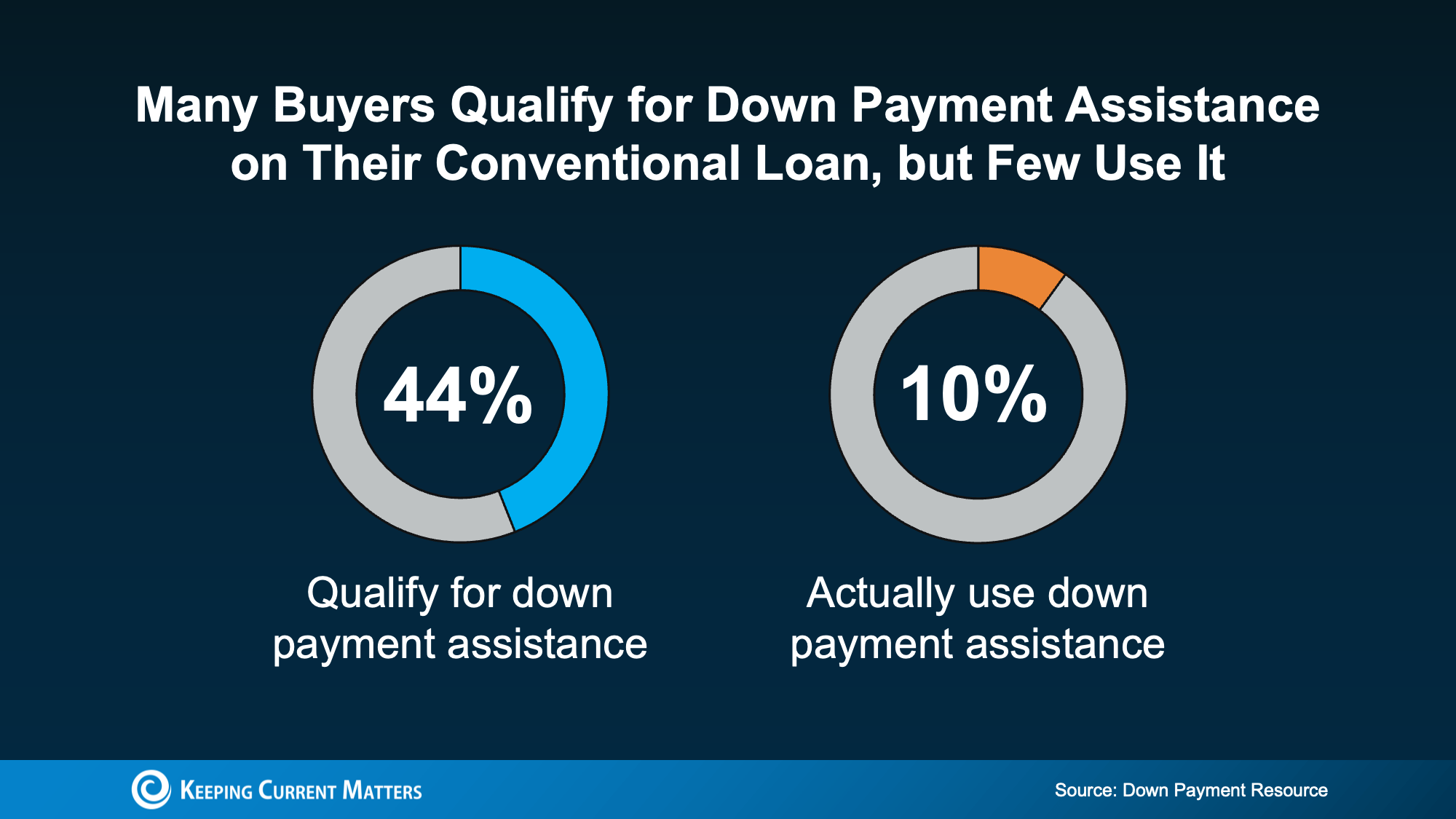
Data from the Urban Institute and Down Payment Resource shows that in the 10 largest U.S. metro areas, nearly 44% of recent homebuyers qualified for a down payment assistance program—yet many closed on their loans without ever tapping into that aid.
Did You Know? Down payment assistance isn't just for low-income or first-time buyers anymore.
According to Down Payment Resource, there are more than 2,600 programs available across the country, and the qualification rules are much broader than most people think:
62% of programs are designed to help first-time buyers.
38% have no first-time buyer requirement, meaning repeat buyers can qualify too.
62% are open to buyers earning $100,000 or more, making middle-income families eligible for serious help.
The "Bank of Mom and Dad" is Stepping Up
If state or local programs don't fit the bill, many buyers are looking closer to home. A study by Veterans United revealed that 59% of parents have either provided or plan to provide financial support to help their children buy a home.
This family support is most frequently used to cover down payments, followed by closing costs and helping counter strict mortgage qualifications. As Chris Birk, VP of Mortgage Insight at Veterans United, notes:
"For many families, helping a child buy a home has become less of an optional gesture and more of a practical response to today’s affordability challenges."
If your family is in a position to offer a financial gift, it could dramatically fast-track your timeline to buying a home.
The Bottom Line
The housing market is adapting, and down payments are more manageable than they have been in years. Between cooling price growth, flexible loan options, underutilized assistance programs, and family support, the path to homeownership might be wider than you think.
Ready to see what your specific numbers look like? Connect with a trusted local lender today to explore which low-down-payment options and assistance programs you qualify for.
