

Real Estate is No Longer One-Size-Fits-All: Why Your Local Market Matters More Than Ever
You’ve probably seen the headlines: “The housing market is cooling off.”
While that’s technically true on a national scale, zooming in tells a completely different story. Real estate has officially become highly fragmented. Depending on where you look, some markets are still seeing solid price growth, some have flattened out, and a few are actively dipping into the negative.
So, what is driving this massive disconnect? It all comes down to a fundamental rule of economics.
The Golden Rule: It All Comes Down to Inventory
The math behind home prices is actually incredibly simple:
More Supply = Less Urgency: When inventory climbs, buyers gain options. More options mean less competition, and less competition means sellers lose the leverage to push prices higher.
Less Supply = Bidding Wars: When inventory stays tight, buyers are forced to compete over a tiny pool of homes, which naturally drives prices up.
We are seeing this exact dynamic play out across the country right now. Regions where inventory has climbed back to (or surpassed) pre-pandemic levels are seeing prices flatten or drop. Meanwhile, areas where inventory is still locked down are seeing prices climb.
As Lance Lambert, CEO of ResiClub, puts it:
“Home prices are still climbing a little year-over-year in many regions where active inventory remains well below pre-pandemic 2019 levels, such as pockets of the Northeast and Midwest. In contrast, some pockets in states like Texas, Florida, and Colorado — where active inventory exceeds pre-pandemic 2019 levels by a solid clip — are seeing modest home price pullbacks or flat pricing.”
A Tale of Two Markets: The Data Breakdown
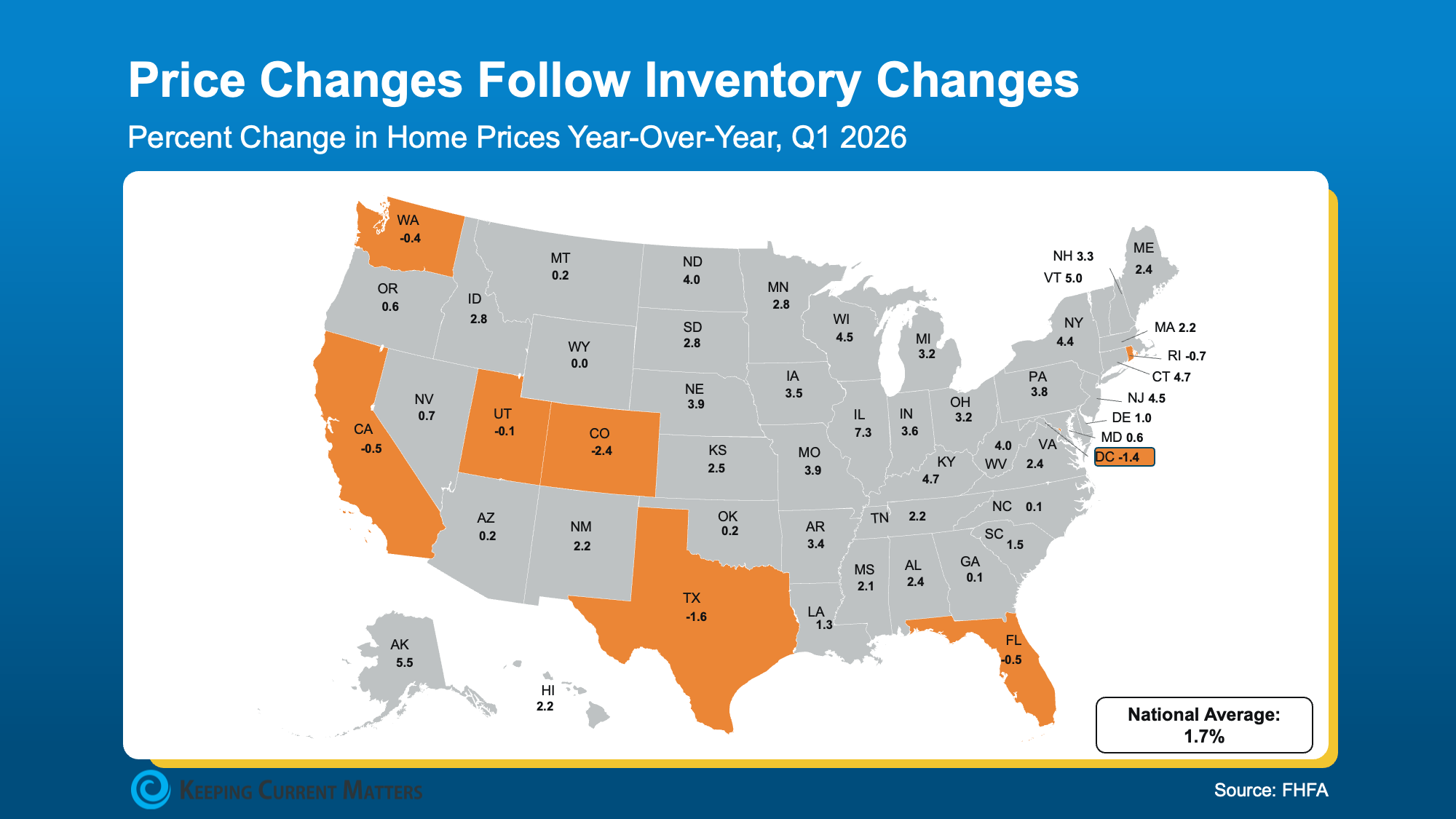
While the national average shows a modest 1.7% price growth, that single number is masking two entirely different realities. According to data from Realtor.com and the Federal Housing Finance Agency (FHFA), the correlation between available homes and home values is undeniable:
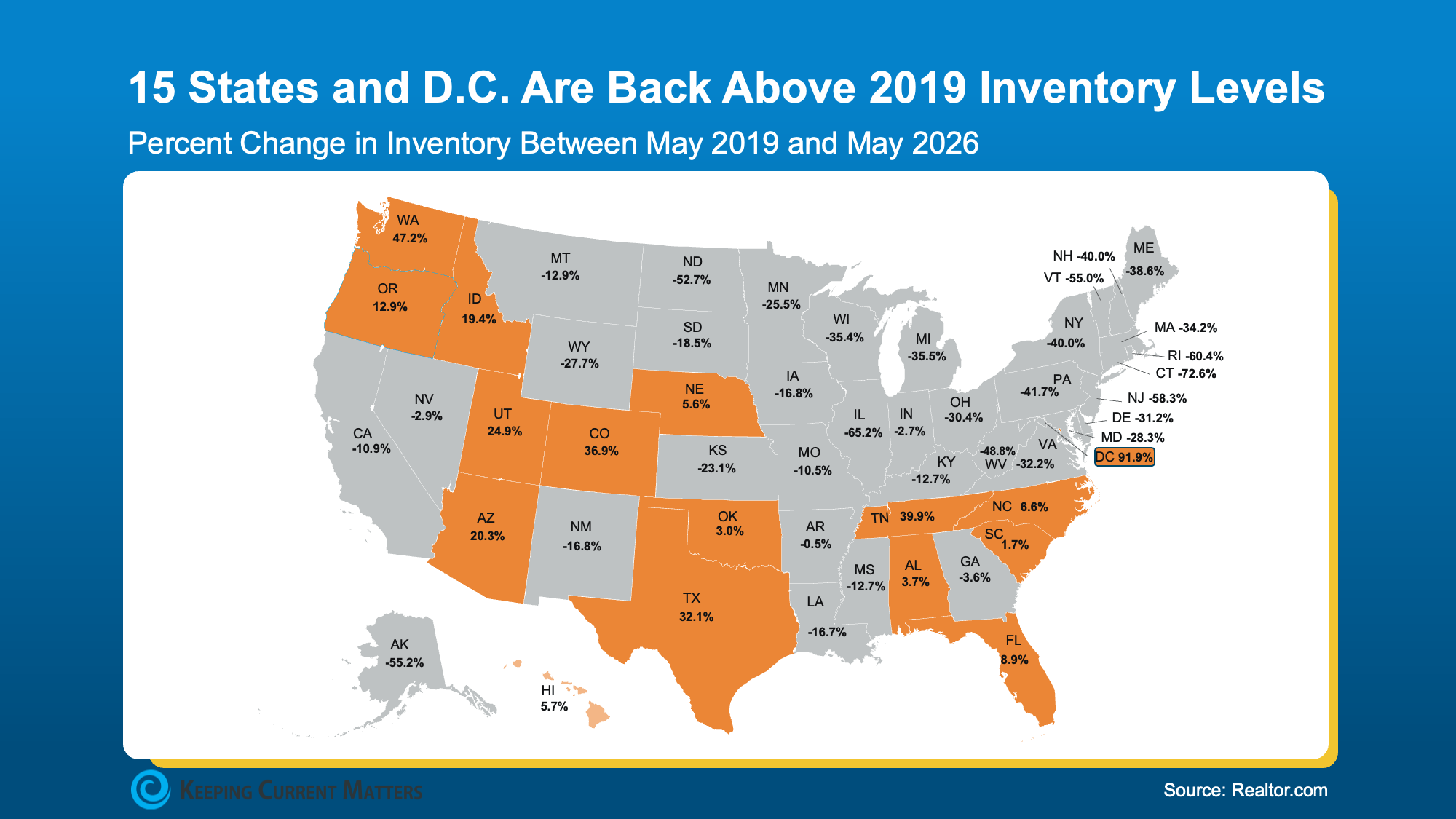
The Inventory Surplus Markets: In 15 states and Washington, D.C., inventory has officially climbed above pre-pandemic 2019 levels. Because buyers have choices, prices in these areas—specifically pockets of Texas, Florida, and Colorado—are seeing modest pullbacks or flat pricing.
The Inventory Crunch Markets: In the vast majority of the country, inventory remains well below pre-pandemic benchmarks. Because options are still limited, prices continue to climb at a moderate, steady pace, particularly in parts of the Northeast and Midwest.
The takeaway? This isn't a coincidence—it's direct cause and effect. Where inventory has returned, buyers have breathing room. Where it hasn't, the seller's market persists.
What This Means for You
Whether you are looking to make a move or cash in on your equity, your strategy depends entirely on your zip code.
🔑 If You Are Buying:
In High-Inventory Zones (e.g., TX, FL, CO): You finally have real negotiating power. Take your time, explore your options, and don't be afraid to ask for seller concessions.
In Low-Inventory Zones (e.g., Northeast): Prepare for competition. You’ll need to be pre-approved, decisive, and ready to act quickly when the right property hits the market.
🏷️ If You Are Selling:
In High-Inventory Zones: Pricing strategy is everything. Overpricing your home is the fastest way to get left behind, resulting in a stagnant listing and an inevitable price cut.
In Low-Inventory Zones: You are still in the driver's seat, but don't get greedy. Accurate, market-smart pricing is still the key to driving multiple offers and securing a clean contract.
The Bottom Line
When it comes to real estate today, location matters more than ever. National trends won't help you buy or sell a house on your specific block.
Want to know exactly what’s happening in your neighborhood? Let’s connect. Reach out today, and let's look at the local data together to build a plan that fits your specific market.
