

Tapping Your 401(k) for a Down Payment: Smart Strategy or Dangerous Gamble?
With housing affordability near record lows and home prices remaining elevated, first-time home buyers are looking for any edge to cover upfront costs. Tapping into retirement funds has surfaced in national headlines as a tempting solution.
Recent data from Empower shows that many workers in their 40s to 60s hold six-figure 401(k) balances, making that accumulated wealth look like an accessible piggy bank for a down payment.
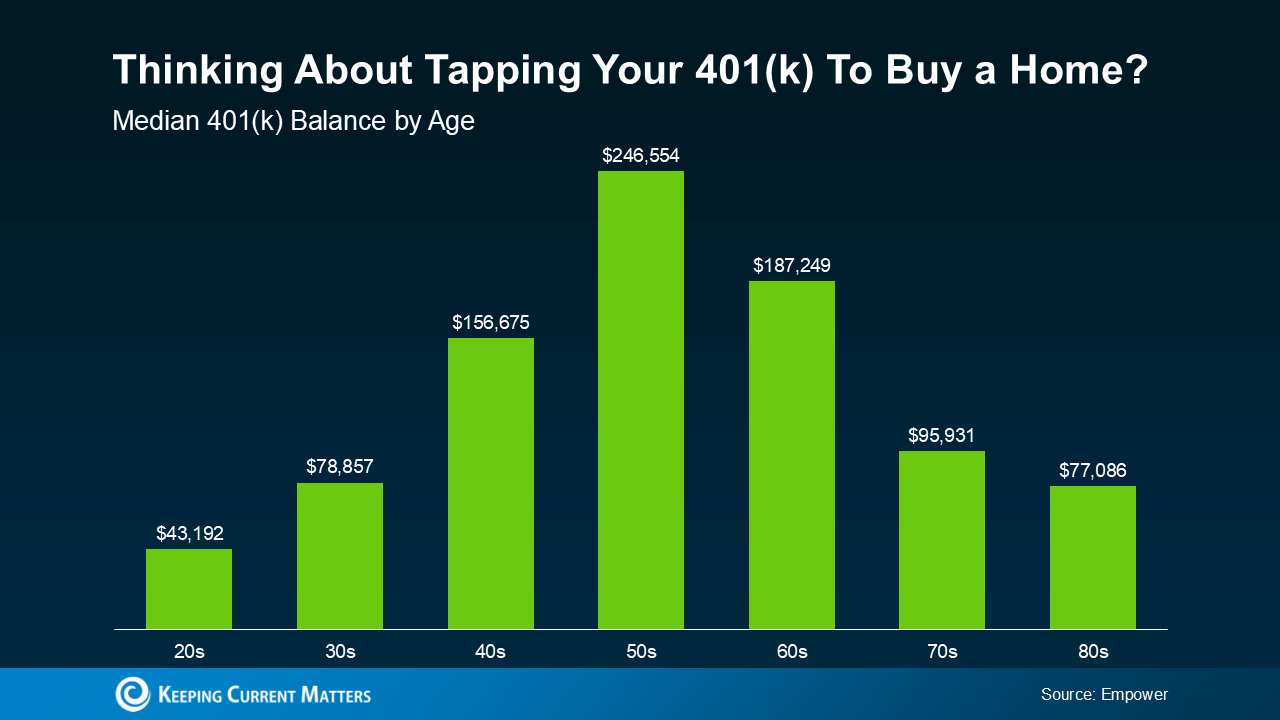
However, pulling money from your retirement nest egg carries long-term consequences that can severely disrupt your broader financial security. Before dipping into your 401(k), it is crucial to examine the true costs and explore safer alternatives.
The Real Risks of Tapping Retirement Savings
While borrowing or withdrawing from a 401(k) gets you into a home faster, the hidden financial trade-offs are significant:
Taxes and Penalties: A standard early withdrawal before age 59½ incurs an immediate 10% IRS penalty, on top of being taxed as ordinary income.
Lost Compound Growth: Removing money permanently takes it out of the market. Even if you plan to rebuild your balance later, you forfeit years of compound growth that cannot easily be made up.
Job Mobility and Repayment Risks: 401(k) loans must be repaid on a strict schedule with interest. If you leave your job—whether voluntarily or due to a layoff—the remaining loan balance often becomes due in full within a very tight timeframe (typically by the next federal tax filing deadline). Unpaid balances are reclassified as distributions, triggering penalties and taxes.
Smarter Down Payment Alternativesaaaaaaaaaaaaaaaaaaaaaaaa
Your 401(k) is far from the only path to homeownership. Consider lower-risk financing avenues first:
Low Down Payment Loan Programs: Conventional mortgages often accept as little as 3% down for first-time buyers. FHA loans require just 3.5% down for qualifying credit scores, while VA and USDA loans offer 0% down payment options for eligible military members and rural buyers.
Down Payment Assistance (DPA): Thousands of state, county, and local programs provide grants or forgivable, low-interest secondary loans to help cover initial down payments and closing costs.
Targeted Savings Plans: Redirecting monthly cash surplus into a high-yield savings account or short-term certificate of deposit allows you to build a dedicated down payment fund without exposing your future to tax penalties.
Bottom Line
Tapping your 401(k) may offer immediate liquidity, but the combination of tax penalties, missed market growth, and loan repayment risks makes it a high-stakes move. Explore low-down-payment loans and down payment assistance programs first, and consult a qualified financial advisor to ensure your home purchase aligns with your long-term wealth goals.
