

Higher Mortgage Rates Are Changing the Game for Home Sellers. Here’s How to Win.
Higher mortgage rates don’t just impact buyers—they completely reshape what it takes to sell your home.
In today’s market, buyers are hyper-focused on affordability. Even a small rate increase can add hundreds to a monthly payment, sending buyers on a search for creative ways to make the numbers work.
Right now, many are finding those solutions in new construction. But if you’re planning to sell an existing home, don’t worry—you can still compete and win. The key is understanding what builders are doing to entice buyers and knowing which levers you can pull, too.
Builders Are Competing on the Monthly Payment
While previously owned home sales continue to feel the pressure of elevated mortgage rates, the new-construction market is holding surprisingly strong.
Logan Mohtashami, Chief Economist at HousingWire, notes that new-home sales recently reached an 8-month high, pacing close to 2019 levels. Meanwhile, existing-home sales lag nearly 1 million transactions behind where they were in 2019.
Why are builders having an easier time navigating high rates? Incentives.
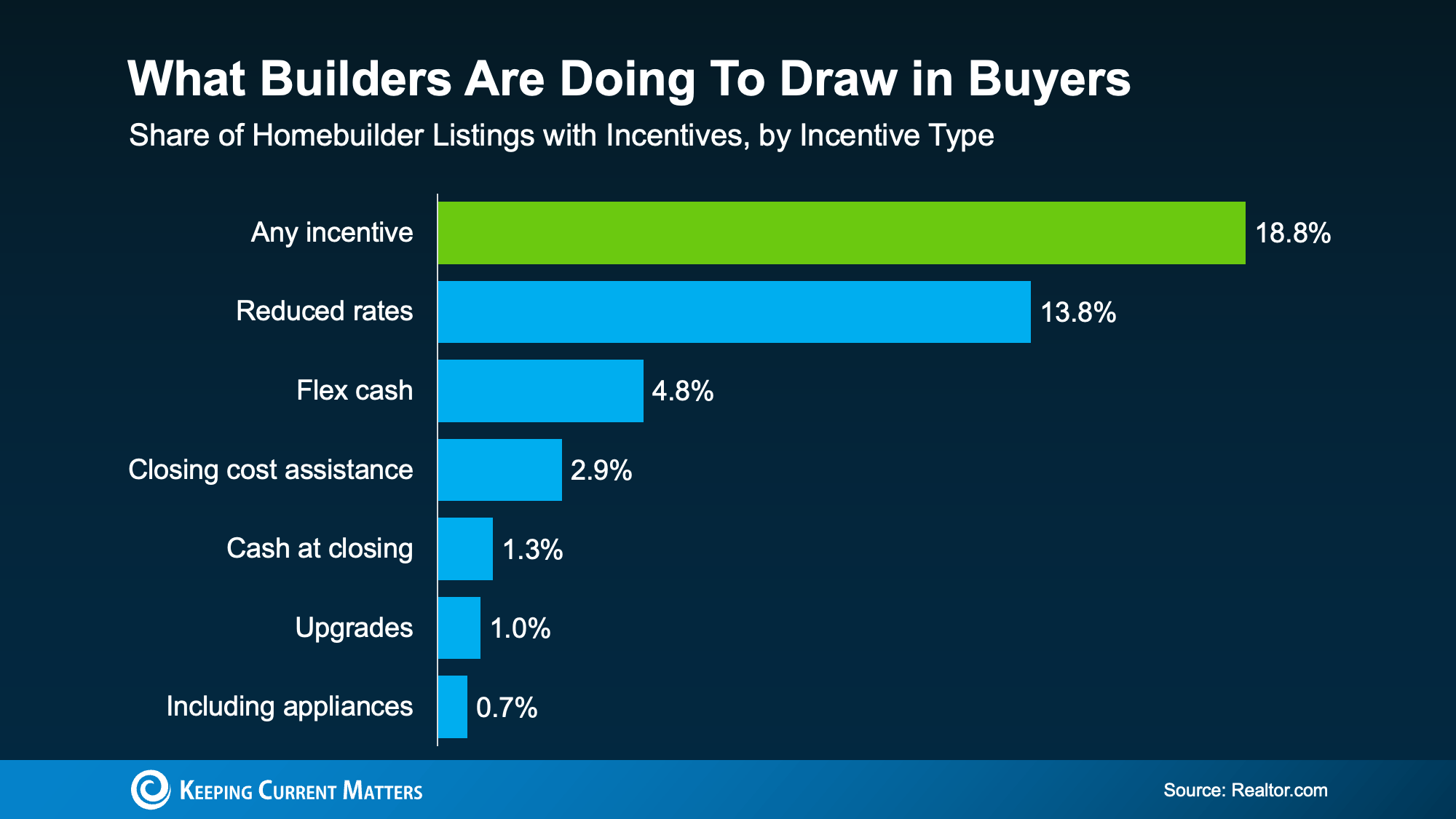
Data from Realtor.com shows that nearly 1 in 5 (18.8%) newly built homes feature advertised buyer incentives upfront. The most popular strategy? Mortgage rate buydowns.
How it works: Builders pay upfront costs to lower the buyer’s interest rate—and, consequently, their monthly payment.
The impact: Reduced rates are featured in 13.8% of new home listings, with some builders offering rates well below 6%.
The result: Buyers save hundreds on their monthly payments, making new builds an easy sell in a tight budget environment.
How Existing Homeowners Can Stand Out
You don't need to be a major homebuilder to offer creative solutions. Here is how individual sellers can compete effectively:
1. Consider Offering Seller Concessions
Rate buydowns aren't exclusive to builders. Depending on the loan type and market terms, individual sellers can also contribute toward a buyer’s interest rate buydown or closing costs. You don't always have to reduce your listing price; sometimes, covering upfront costs or buying down a point gives the buyer far more relief where it matters most: their monthly budget.
2. Highlight Unmatched Location Benefits
New developments are often built in suburban or exurban fringes. If your home is in an established neighborhood closer to downtown, better school districts, mature landscaping, or public transit, lead with those strengths.
"Sellers of existing homes are facing a lot of competition from the new-home space... so sellers should highlight the local amenities of their neighborhoods in contrast to the more suburban or exurban communities where many new homes are built."
— Joel Berner, Senior Economist at Realtor.com
3. Price for Today’s Reality, Not Yesterday’s Highs
Builders were quick to adjust prices to match current buyer buying power. Resale sellers must do the same.
"...existing homeowners now have to do the price discovery that builders have been doing since 2022."
— Robert Dietz, Chief Economist at the National Association of Home Builders (NAHB)
This doesn't mean slashing your price unnecessarily. It means pricing your property strategically based on what local buyers can afford right now—not what your neighbors were getting a few years ago.
Real Estate Is Always Local
The level of competition from new construction varies dramatically by region. In some markets, new builds dominate the inventory; in others, they are virtually non-existent.
Before making any pricing or incentive decisions, partner with a knowledgeable local real estate agent. They will help you analyze what builders and other sellers in your specific neighborhood are offering, allowing you to position your home for a quick, successful sale.
