

Waiting for a Housing Crash? Why Holding Off Could Cost You
It’s completely understandable why so many prospective homebuyers are currently sitting on the sidelines. The logic seems sound: wait for the impending "housing crash," snag a better deal, and avoid the nightmare of watching your new home's value drop right after you get the keys. Nobody wants to overpay.
But here is the million-dollar question worth asking yourself: What if the crash you’re bracing for isn’t actually going to happen?
If we look past the sensationalized headlines and focus on the latest data, a crash is the last thing you should be expecting.
The Reality Disconnect: What the Experts See
If you spend any time scrolling through social media, you're bound to see posts declaring that the housing market is on the brink of collapse. It is true that a handful of specific local markets are experiencing minor price corrections right now. However, localized adjustments are not the same thing as a nationwide crash.
Negative news gets clicks, which is why algorithms heavily push stories about the few markets seeing declines. Unfortunately, this creates an illusion that home values are plummeting everywhere.
The reality paints a very different picture. According to recent data from Realtor.com, home prices are actually still rising in 71% of housing markets across the country.
Forecasted Growth for the Next 5 Years
So, where are prices realistically headed from here? To answer that, we can look at the Home Price Expectations Survey (HPES) from Fannie Mae.
Every quarter, this survey polls over 100 economists, housing experts, and market analysts, asking them to forecast the future of home prices based on hard data. Despite the broader economic uncertainty we see today, these experts are remarkably aligned on one core conclusion: a crash is not coming.
Instead, the consensus forecasts that home prices will continue to rise at a more normal, steady pace every year for at least the next five years.
Even the Pessimists Agree
If you're thinking, "Of course the industry optimists are going to say prices will rise," consider this: researchers split the survey panel into groups based on how bullish (optimistic) or bearish (pessimistic) they were about the housing market.
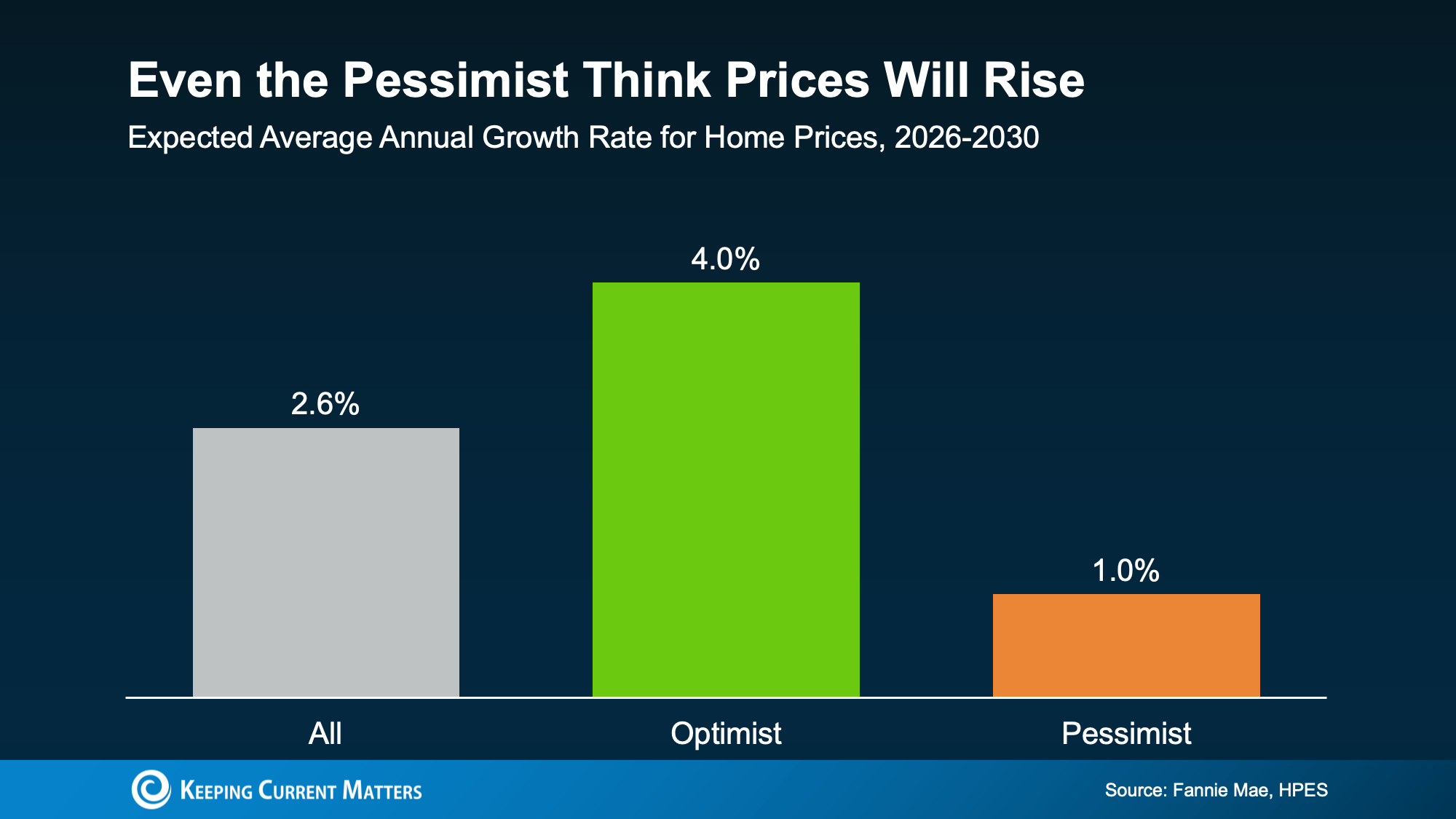
The Optimists predict we will see prices go up by roughly 4% each year.
The Pessimists predict a much slower growth rate of roughly 1% each year.
The crucial takeaway here is that the ongoing debate among real estate experts isn’t whether prices will crash—it’s how much they will rise. That is a radically different conversation than the doom-and-gloom narrative happening online.
The Hidden Cost of Waiting
If you are strictly delaying your move until prices plummet, the data suggests you are going to be severely disappointed. More importantly, waiting could end up being an incredibly expensive mistake.
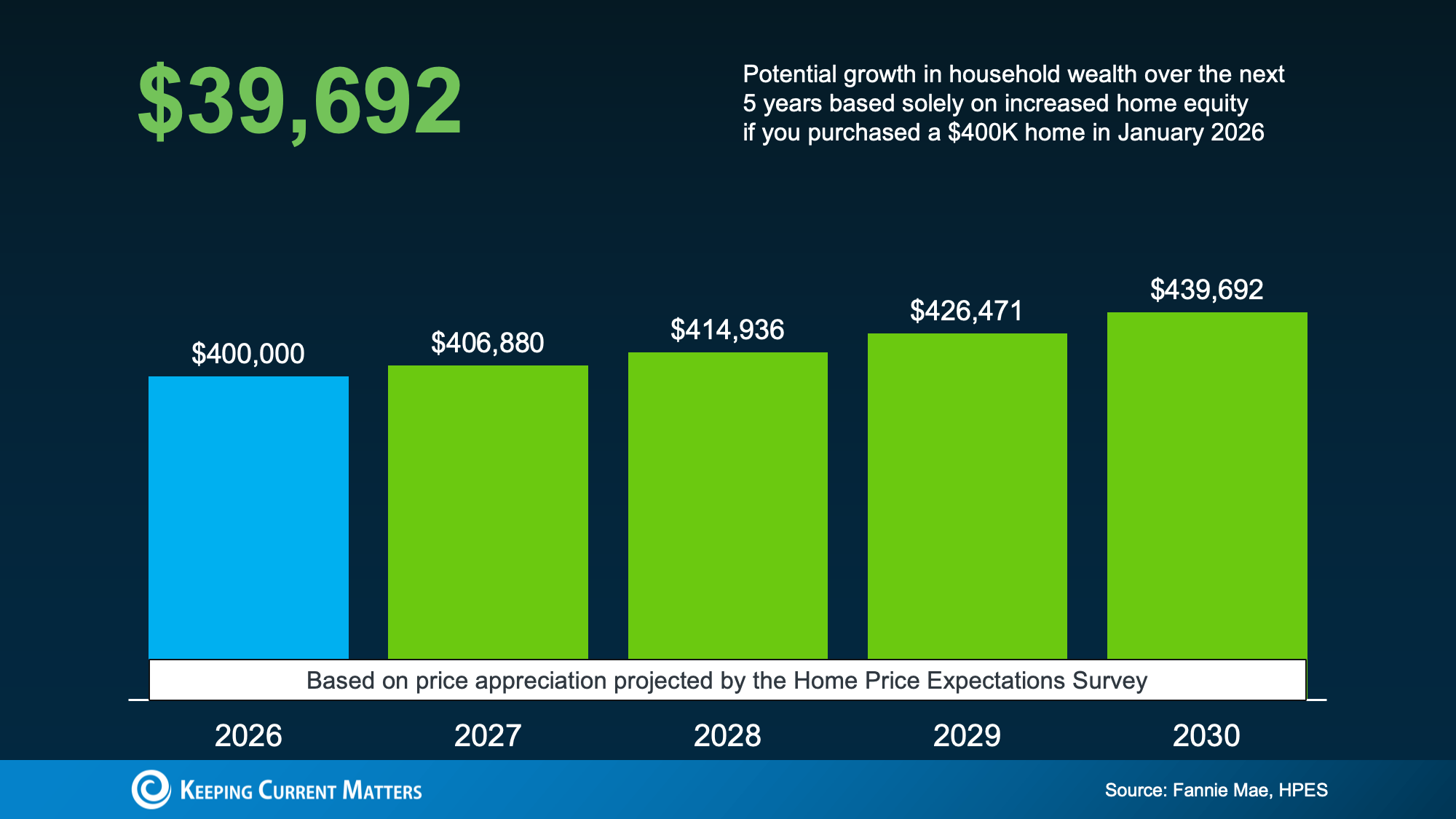
Based on the HPES forecast, even in today's moderated market, a buyer who purchased a $400,000 home this past January stands to gain nearly $40,000 in equity over the next five years from appreciation alone.
While real estate is always highly dependent on local conditions and these numbers are national averages, the overarching trend is clear. The biggest risk in today's market isn't that home prices will crash. The biggest risk is waiting for a crash that never comes. Delaying your purchase could mean missing out on tens of thousands of dollars in equity—or worse, paying $40,000 more for the exact same house five years from now.
Bottom Line
A lot of buyers are letting the fear of falling prices dictate their life plans, but the data and the experts simply do not support that fear.
If you are on the fence and trying to decide if waiting still makes sense for your family, the best move you can make is to connect with a trusted local real estate agent. They can help cut through the national noise, explain exactly what is happening in your specific neighborhood, and help you make a data-driven decision for your future.
