

Why the “Silver Tsunami” Won’t Crash the Housing Market—And What It Means for Sellers
If you’ve been keeping an eye on real estate headlines, you’ve likely come across the term "silver tsunami." It refers to the idea that millions of properties owned by aging Americans will soon hit the market as baby boomers downsize, retire, or transition into new living arrangements.
A phrase like "tsunami" naturally conjures images of a sudden, overwhelming wave of inventory flooding the market and tanking home values. However, when you look past the sensational headlines and examine the actual data, a very different picture emerges.
If you are considering selling your home, this trend isn't a reason to hit pause on your plans. Here is what the research actually says about the decade ahead.
Expect a Gradual Shift, not a Sudden Flood
According to projections from Realtor.com, roughly 13.9 million homes owned by older Americans are expected to change hands by 2036. While 13.9 million sounds massive on paper, these properties aren't going to be listed all at once.
Instead, the data points to a steady, manageable trickle over the next ten years—averaging about 1.3 to 1.5 million homes per year (see graph below).
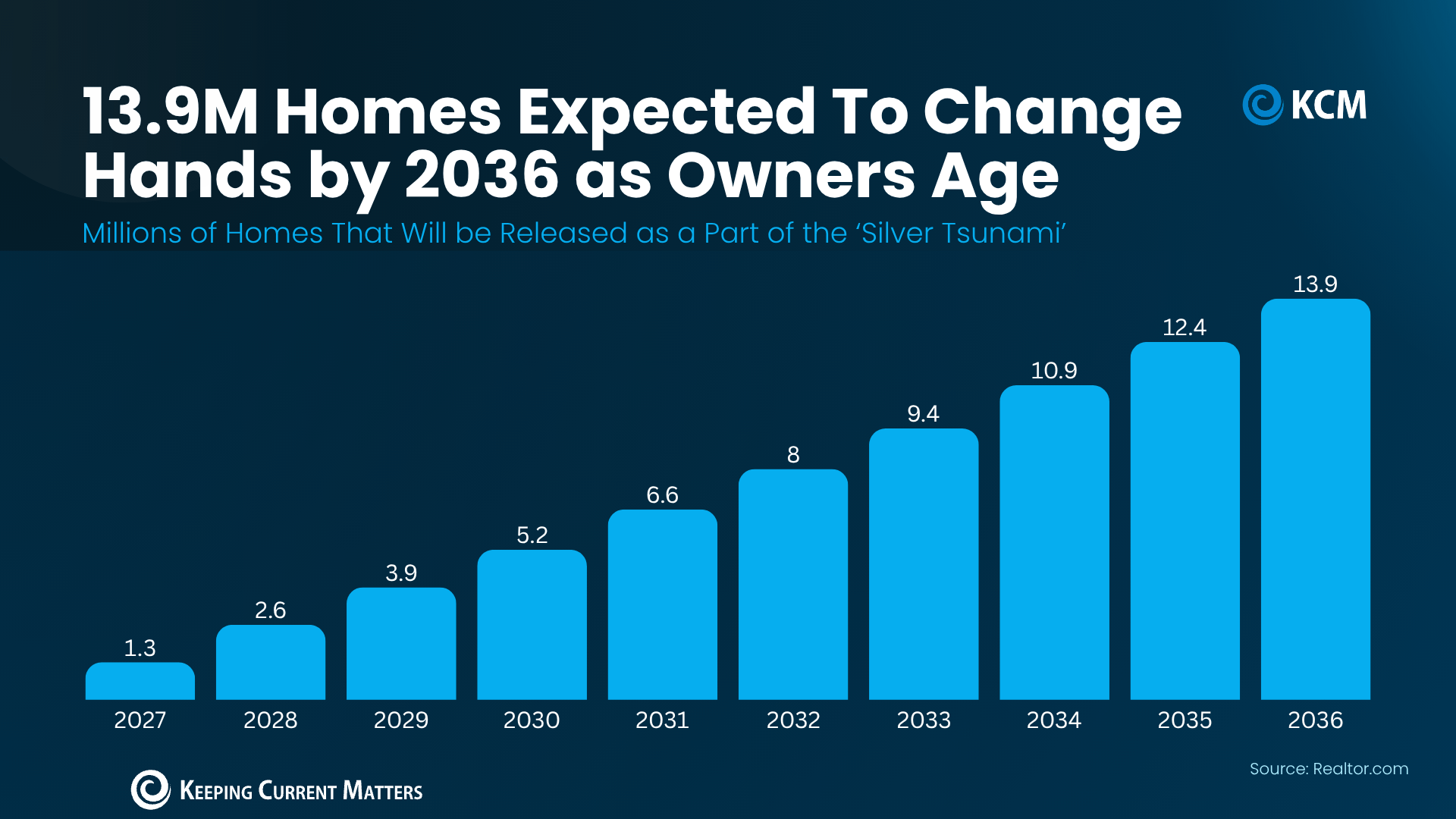
Rather than an overnight surge, this represents a normal, gradual turnover as longtime homeowners decide where and how they want to spend their next chapter. "Silver tsunami" makes for great clickbait, but the reality is far more measured.
The Market Actually Needs the Inventory
Even as these homes enter the market over the next decade, they won't overwhelm buyer demand. That’s because the U.S. housing market has been operating in a deep inventory deficit for years.
Following the 2008 housing crash, residential construction slowed to a crawl and stayed below historical averages for well over a decade. That prolonged underbuilding created a massive supply gap that still affects the market today. According to a report from the White House Council of Economic Advisers:
"If homebuilding and the growth of the single-family housing stock had continued at their historical pace instead of falling dramatically after 2008, there would be 10 million or more additional single-family homes today."
As older homeowners gradually sell, their properties will help fill an existing void rather than create a surplus. At the same time, millions of younger Americans are reaching prime homebuying age, ensuring steady demand for those homes. Ultimately, a gradual increase in inventory is healthy—it gives buyers more breathing room and helps steer the market toward a much-needed balance.
What Actually Matters When Selling Your Home
For current homeowners thinking about making a move, the takeaway is simple: don’t base your timeline on a 10-year national forecast.
Real estate is hyper-local. Inventory levels, buyer demand, and days-on-market vary drastically from one city—and even one neighborhood—to the next. Those immediate, local conditions are what truly dictate how you should price, prep, and market your property.
Instead of worrying about macro headlines, focus on actionable local insights by partnering with a knowledgeable neighborhood real estate agent. They can help you evaluate:
Local competition: How many comparable homes are currently active in your area, and how does yours stack up?
Recent comps: What are similar properties actually closing for right now? This is the foundation of a smart, competitive pricing strategy.
Current buyer preferences: Which updates, repairs, or staging tweaks will give you the highest return on investment and make the strongest first impression?
National trends make for interesting reading, but your selling strategy should always be built on what is happening on your street today.
Bottom Line
While the "silver tsunami" sounds like an impending wave of listings, the data points to a gradual, decade-long shift rather than a sudden flood. If you're thinking about selling, don't let alarming headlines make you second-guess your timeline—connect with a local real estate agent to see what’s actually happening in your neighborhood right now.
