

The Housing Market is Shifting: What It Means for Buyers and Sellers Right Now
Remember just a few years ago when home buying felt like a wild sport? Sellers held all the cards, and buyers were practically forced to offer way over asking or wave inspections just to stand a chance.
Fortunately, those chaotic days are fading.
While real estate is always local, the national market is slowly transforming back into a two-way street. We are finally seeing a level of balance that has been missing for years—and that changes the game for everyone.
The Most Buyer-Friendly Market in Years
The data shows a clear shift. According to recent insights from Realtor.com:
"The national housing market is balanced but gradually loosening as the cycle moves in a more buyer-friendly direction . . ."
As inventory has steadily grown, major metropolitan areas have begun flipping back toward balanced or buyer-friendly terms. When you look at the top 50 metro markets over time, the trend is undeniable: in 2021, almost every major metro was a seller’s market. By the end of 2025, only 1 in 3 still favored sellers.
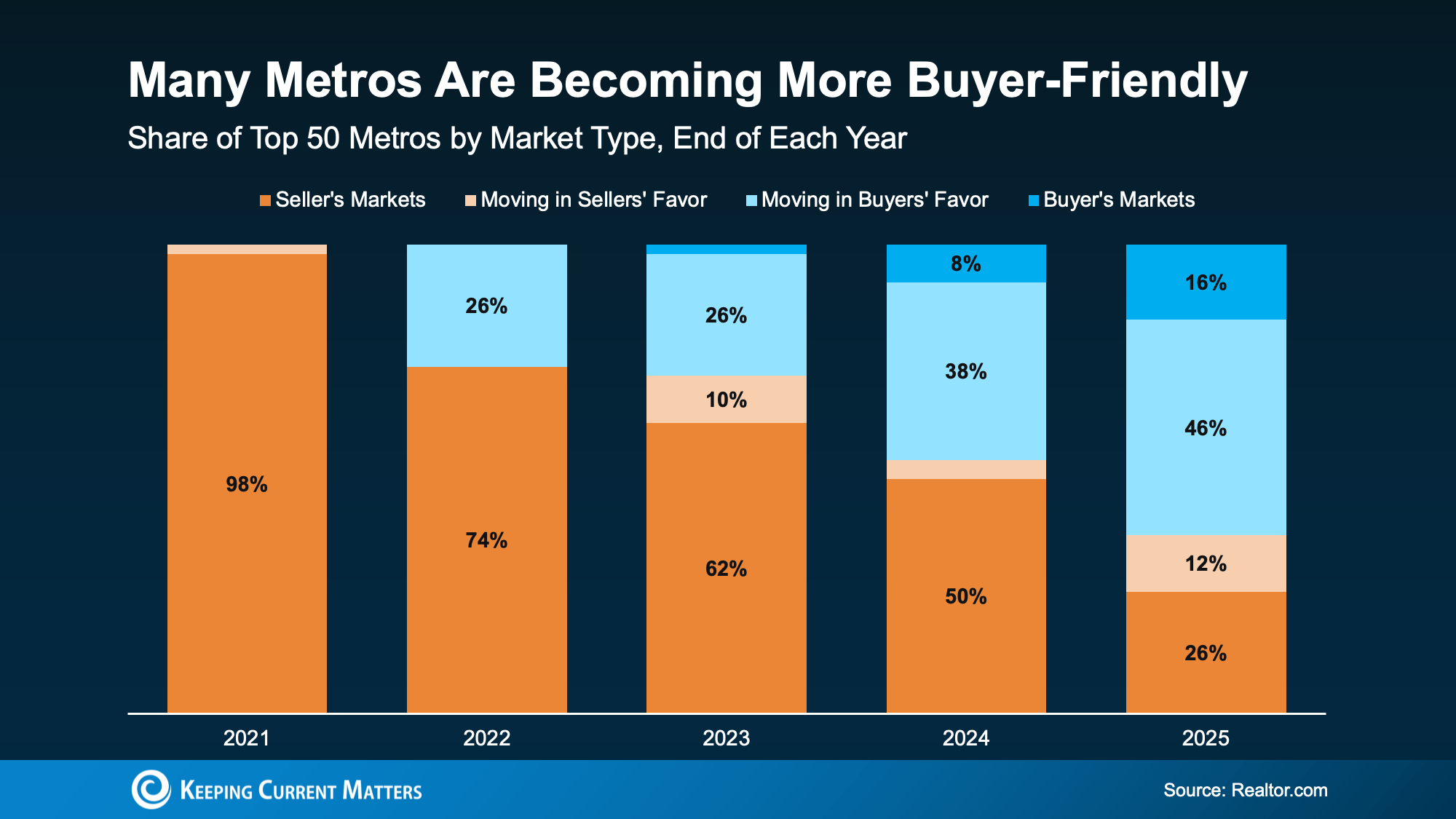
While we aren't in a total buyer's market everywhere, we are a long way from the frantic environment of 2021.
A Tale of Two Regions: Supply and Demand
Real estate power ultimately depends on your zip code. The current divide comes down to one major factor: construction activity.
The Sun Belt (Advantage: Buyers)
Cities like Austin, Tampa, and San Antonio experienced a massive building boom over the last few years. Today, that influx of new construction means more options, less competition, and more room for buyers to negotiate.
The Northeast & Midwest (Advantage: Sellers)
Metros like Rochester, Hartford, and Buffalo didn't experience that same wave of new building. Because housing supply remains incredibly tight, competition in these areas stays fierce.
As Jeff Ostrowski, Housing Analyst at Bankrate, puts it:
“The softest markets now [have] experienced big booms that spurred new building, and that has led to a large supply of new and existing homes on the market in those places.”
Practical Action Plans for Your Move
Because market dynamics are so fractured right now, your strategy needs to match your local reality. Here is how to navigate a mismatch between your real estate goals and your local market conditions.
If You’re Buying in a Seller’s Market:
Get Pre-Approved First: Don't shop without a pre-approval letter. It proves to sellers that you are qualified and serious.
Move with Speed: When the right home hits the market, be ready to view it and make a decision quickly.
Offer Flexible Terms: Sometimes a fast closing date or letting the seller pick the move-out date matters more than top dollar.
Lean on Your Agent: Work together to craft an offer that stands out without over-leveraging yourself.
If You’re Selling in a Buyer’s Market:
Price It Right From Day One: Buyers have options now. If you overprice, your home will sit on the market, and you'll likely end up chasing the market down.
Nail the Presentation: Double down on curb appeal, professional staging, and high-quality photography to stand out from the competition.
Be Open to Incentives: Consider offering sweetners like covering a portion of the buyer's closing costs or throwing in a home warranty.
Prepare to Negotiate: Expect counteroffers and requests for repairs. Flexibility is your best friend.
The Bottom Line
The housing market is no longer a one-size-fits-all story. To make the smartest move possible, you need to know exactly which way the scales are tipping in your specific neighborhood.
Want to know if your local market favors buyers or sellers? Let's connect to map out the perfect strategy for your next move.
