
Neighboring the Cloud: How Nearby Data Centers Shape Home Values and Neighborhoods
Data centers were rarely top-of-mind for homebuyers a decade ago. While school ratings and neighborhood quiet time usually dominate the checklist, massive server facilities are rapidly becoming part of the suburban landscape.
Understanding how these digital engines affect property values, infrastructure, and day-to-day living helps buyers and sellers make informed decisions.
The Expansion of Data Centers
According to Realtor.com, only a dozen ZIP codes housed a large data center in 2015. By mid-2026, that number climbed past 100, with continuous growth projected.
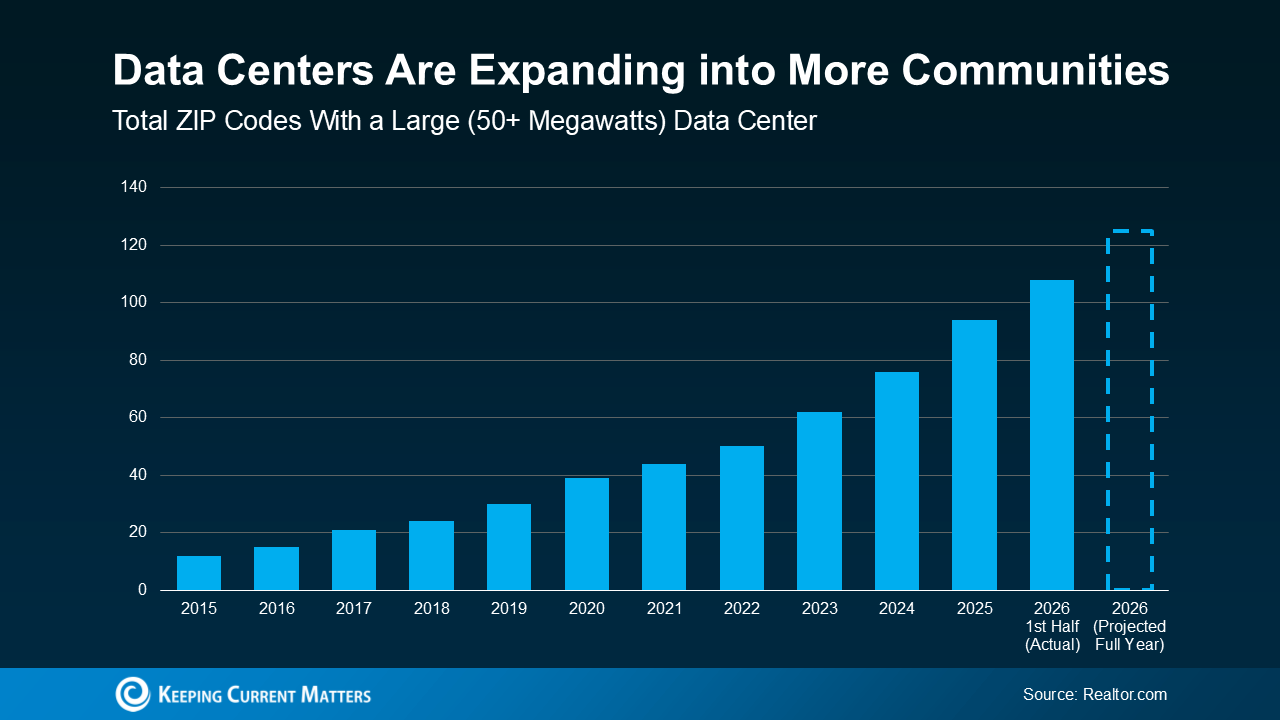
Data center construction is heavily concentrated in ten key states:
Sunbelt & West: Arizona, Nevada, Texas, Utah
Midwest: Illinois, Indiana, Ohio
East Coast: Georgia, Pennsylvania, Virginia
Property Value Impact
A common concern is whether a nearby facility will cause home values to plummet. Recent research indicates this fear is largely unfounded.
Market Parity: Home values in ZIP codes with data centers generally track identically to similar communities without them.
Pricing Trends: Listing prices often experience a modest initial lift around a facility's opening, with no statistically significant long-term gains or losses strictly tied to the data center itself.
Property Specifics: Impact varies by immediate proximity, natural buffering, and overall neighborhood layout.
Benefits vs. Drawbacks
Community Advantages
Tax Base Growth: Facilities generate substantial property tax revenue that helps fund local public schools, emergency services, and civic projects.
Infrastructure Upgrades: Development often drives regional improvements to power grids, high-speed fiber networks, and local roads.
Low Daily Traffic: Once construction concludes, data centers generate minimal daily vehicle traffic compared to retail centers or traditional office parks.
Key Considerations
Resource Demands: Heavy electricity and water consumption can strain local resources, though regional utility rate adjustments tend to be gradual due to local regulatory safeguards.
Visual Profile: Large industrial buildings, high-voltage transmission lines, and outdoor substations can alter the visual character of the area.
Noise Factors: Industrial cooling equipment, backup generators, and delivery traffic can create operational noise depending on your distance from the site.
Action Steps for Buyers and Sellers
For Buyers:
Check Zoning Plans: Research active proposals or approved developments within a 3-mile radius.
Assess Nuisance Factors: Visit the site during operational hours to gauge baseline noise from cooling units and generators.
Factor Utility Trends: Review local energy rate trajectories if moving into a high-density tech corridor.
For Sellers:
Stick to the Data: Avoid assuming a nearby facility automatically reduces your equity.
Prepare Answers: Be ready to provide buyers with clear facts regarding the facility's distance, tree buffers, and construction timelines.
Bottom Line
The presence of a data center isn't an automatic red flag or a guaranteed windfall for local real estate. Broad market trends show that these facilities integrate into communities without crashing property values, but immediate hyper-local proximity—such as sound, sightlines, and localized grid demands—still shapes individual buyer perception.
Consulting a knowledgeable local agent remains the best way to evaluate a specific property's standing.
